Night of Silence
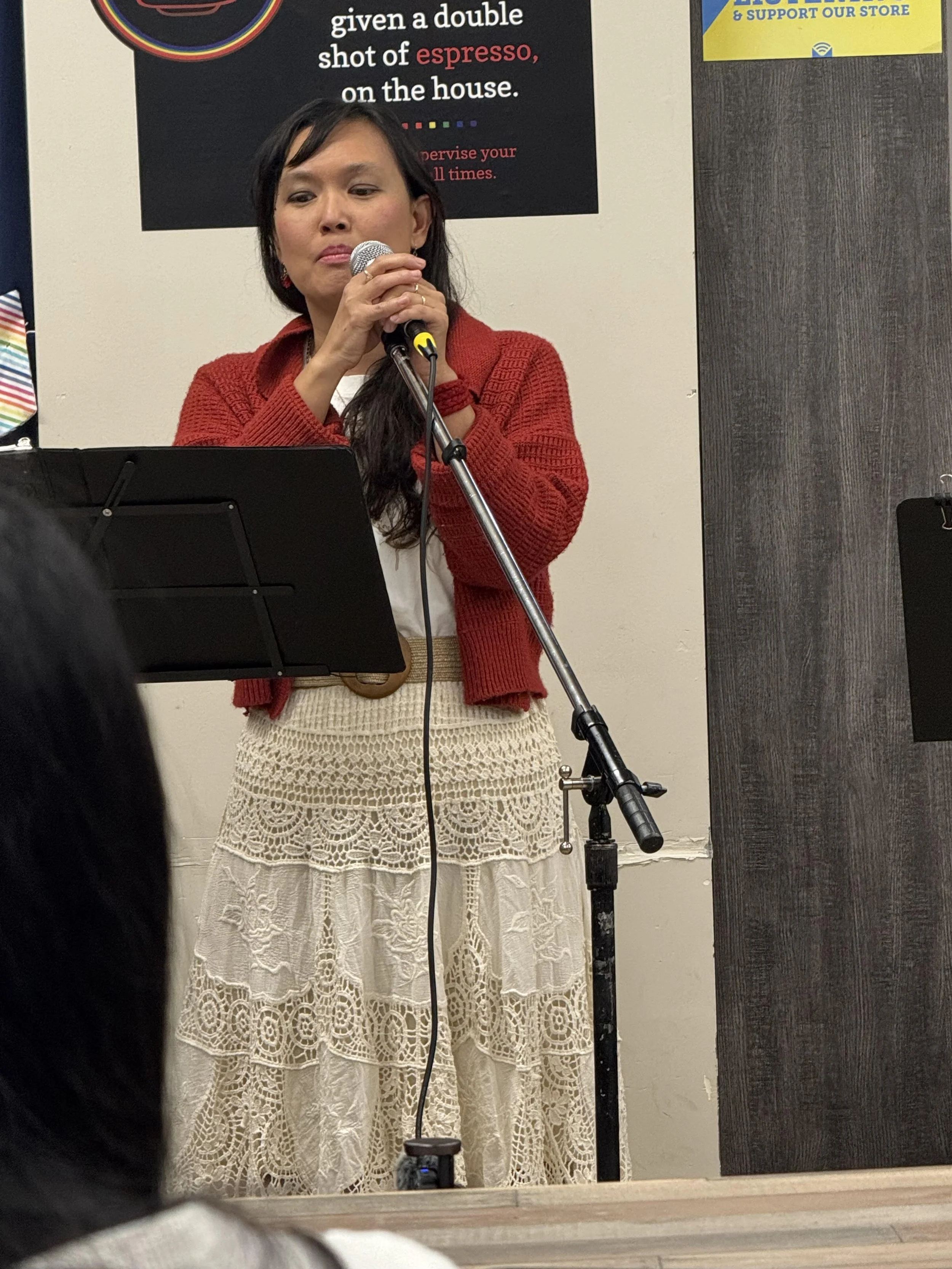
A pause placed where momentum would otherwise carry me past something essential.
Following our first full-length concert, I lost my voice.
Unable to sing, I found myself worried as the next live performance draws near.
And as worries go, they grow. They can grow so big as to create elaborate stories about failure and punishment.
My voice giving out doesn’t mean I’ve failed. And it certainly didn’t give out to punish me.
Perhaps it was a punctuation—a pause needed by the body, placed where momentum would otherwise carry me past something essential. Stay here, it whispered—and actually, kind of demanded.
There is a particular bravery in expression that looks loud from the outside but is quietly costly within.
To be seen. To be heard. To step forward with one’s own sound.
The nervous system knows this risk well, even when the heart is ready—especially when the heart is ready.
And so the body does what it knows how to do best: it protects. It freezes. It creates pain. It inflames. It silences. All in service of protecting life.
So in the pause… the deep longing to be met can be heard.
In that space,
I heard a disheartened mother.
An artist with such vulnerable emotions.
An overworked body begging to rest.
And a soul that simply wanted to breathe.
“Night of Silence” took on a different meaning for me. I thought at first that I was going to sing it for all the cold and weary souls out there.
It turns out, as many songs go, that I am singing this song first for myself.
I am the weary soul wanting to rest in silence, awaiting with hope for the morning that is sure to come.
To tend to my heart like a delicate rose.
To be a friend to my voice so boldy wants to speak.
To listen to all parts of me ever so kindly, that I may in turn be a the kind of friend that the world truly needs.”